Investigation
Leak detection Melbourne: water leak detection services
Professional water leak detection in Melbourne for homes and commercial buildings: find where the water starts, not just where it appears
Water often travels before it becomes visible. It can move along a slab, wall cavity, pipe, joint or framing member and show up well away from the original fault. That is why water leak detection in Melbourne needs testing, not guesswork.
Our leak detection services in Melbourne use licensed leak detection plumbers and staged building tests to separate plumbing faults from failed seals, drainage, waterproofing, rainwater entry and condensation. More than one issue may be present.
We provide commercial leak detection services in Melbourne as well as residential work: apartments, strata buildings, offices, retail and body corporate properties, with a clear written report for owners, managers and insurers.
Where leaks commonly occur
- Bathrooms, showers and laundries: supply pipes, wastes, shower screens, failed grout or sealant, floor wastes, waterproofing and condensation.
- Basins and vanities: taps, flexible hoses, waste traps, basin seals and water tracking behind cabinetry or wall linings.
- Balconies and alfresco areas: door thresholds, cracked grout, perimeter joints, outlets, penetrations, balustrade fixings and wall junctions.
- Gardens and planter boxes: irrigation faults, blocked drainage, failed membranes, root movement and soil or mulch built up above flashings.
- Stairways and landings: cracks, tread-to-riser joints, exposed edges, fixings, flashings and drainage from the landing above.
- Saunas and steam rooms: plumbing, wastes, door and service penetrations, waterproofing, vapour control, ventilation and heavy condensation.
- Swimming pools and spas: pipework, skimmer boxes, returns, lights, balance tanks, plant equipment, shell cracks, joints and adjoining decks.
How we find the source
- Pressure testing of supply pipework and controlled flow testing of wastes, drains and fixtures.
- Isolated spray, flood or dye tests to screens, joints, thresholds, decks and penetrations.
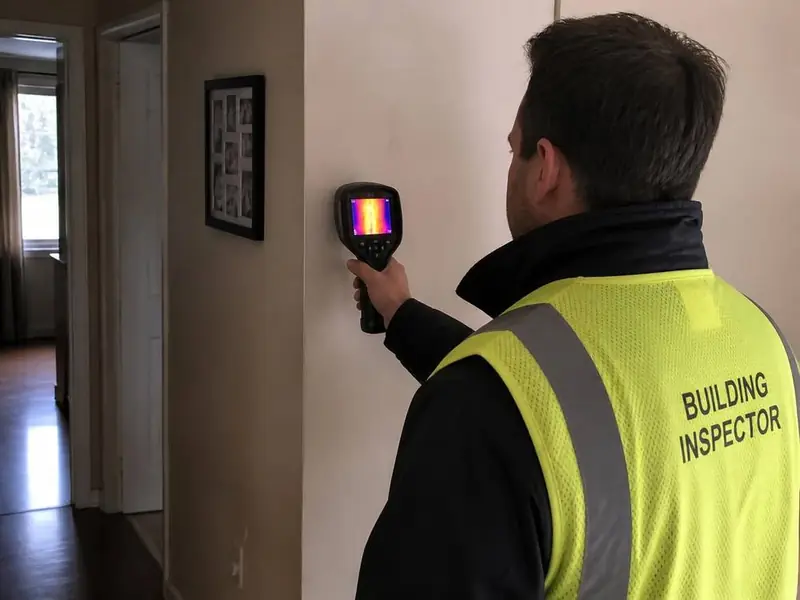
- Thermal imaging, moisture mapping and direct readings in affected and adjoining areas.
- Pool hydraulic-line pressure testing, level monitoring and dye testing by the relevant specialist when needed.
- Humidity, airflow and condensation checks in bathrooms, laundries, saunas and other enclosed wet areas.
- Testing one zone at a time while monitoring the room, ceiling or structure beside or below it.
Testing starts without opening finishes. A small access point may still be needed if the source remains concealed.
Clear results
The report explains what was tested, whether the water entry was reproduced, the source supported by the results and the repair, drying or further investigation required.
Book wet-area testing
Identify the source and the affected area before authorising repair work.
Related page: View wet-area and water leak repairs