Assessment
Mould assessment in Melbourne
A property-specific mould assessment documents the affected materials, moisture conditions and recommended next steps, so you can make an informed decision before remediation begins.
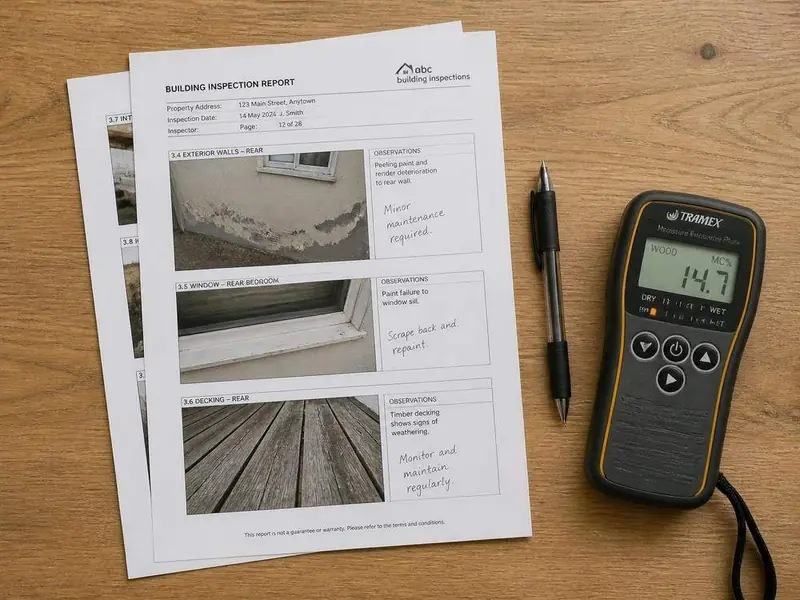
A mould assessment brings the property history, visible condition, moisture readings and access limitations together in a clear scope. It is useful when you need to understand the extent of the problem, compare recommendations or plan the right sequence of repairs and remediation.
DAC assesses houses, apartments, rental properties, strata areas and commercial premises across Melbourne and regional Victoria. The assessment is based on the accessible property evidence, not a standard template or an assumption that every mark requires the same work.
The agreed assessment scope can document observations, photographs, moisture conditions, likely contributing sources, affected materials and recommended action. It does not diagnose a health condition, and laboratory sampling is recommended only where the result will answer a useful question.
Inspection or mould assessment?
A mould inspection focuses on finding visible growth, damp materials and the moisture source. A mould assessment interprets those findings for the property and sets out what they mean for remediation, repairs, drying and further investigation. The two can often be completed during the same attendance, with the reporting scope agreed beforehand.
If you only need the moisture source traced, start with the mould inspection and moisture investigation page. If you need the condition and recommended work documented for a decision, request a mould assessment.
What the assessment covers
- The reported history, previous cleaning, repairs and relevant water events.
- Visible mould, staining, odours and damage in accessible affected and adjoining areas.
- Moisture readings and thermal imaging where suitable for the materials and conditions.
- Likely plumbing, water-entry, drainage, ventilation or condensation contributions.
- The condition of accessible porous finishes, cavities, insulation, flooring and contents.
- Inspection limitations and any areas that need further access or specialist testing.
- The recommended order for moisture repairs, remediation, drying and completion checks.
When an assessment is useful
- Mould keeps returning after cleaning or earlier repair work.
- You need a documented remediation scope before approving work.
- A landlord, tenant, property manager, owners corporation or insurer needs the findings set out clearly.
- Several rooms, concealed materials or contents may be affected.
- Flooding, a leak or persistent condensation has created uncertainty about the extent of damage.
- An existing report identifies moisture or mould but does not provide a practical work sequence.
How the assessment proceeds
- 1
Define the question
We establish what decision the assessment needs to support, who needs the findings and whether an existing report or remediation scope is available.
- 2
Inspect and measure
The affected and surrounding accessible areas are inspected, with moisture readings and other targeted checks selected for the property.
- 3
Consider the moisture source
Accessible plumbing, wet areas, roofing, walls, drainage, ventilation and condensation factors are considered before recommendations are made.
- 4
Set out the scope
The findings, limitations, affected materials and recommended sequence are documented in the agreed report format.
- 5
Plan the next step
We explain whether further investigation, moisture repairs, mould remediation or another specialist input is the appropriate next step.
What the findings support
The assessment gives owners, occupants and property managers a clearer basis for deciding what to do next. Recommendations distinguish confirmed observations from likely causes and identify anything that could not be inspected.
Remediation recommendations remain conditional on the moisture source being repaired or controlled. Plumbing, waterproofing, ventilation upgrades and reinstatement are coordinated separately where required.
Melbourne mould assessment coverage
We attend metropolitan Melbourne, the Mornington Peninsula, Geelong and the Bellarine, the Dandenongs and the Yarra Valley, with regional Victorian assessments by arrangement. Tell us your suburb or postcode so coverage, access, timing and any travel charge can be confirmed before attendance.
Request a mould assessment in Melbourne
Tell us your suburb, property type, affected areas and what decision the assessment needs to support. Include any existing findings so we can confirm the appropriate scope and availability.
Related page: Ready to plan the work? View mould removal and remediation in Melbourne